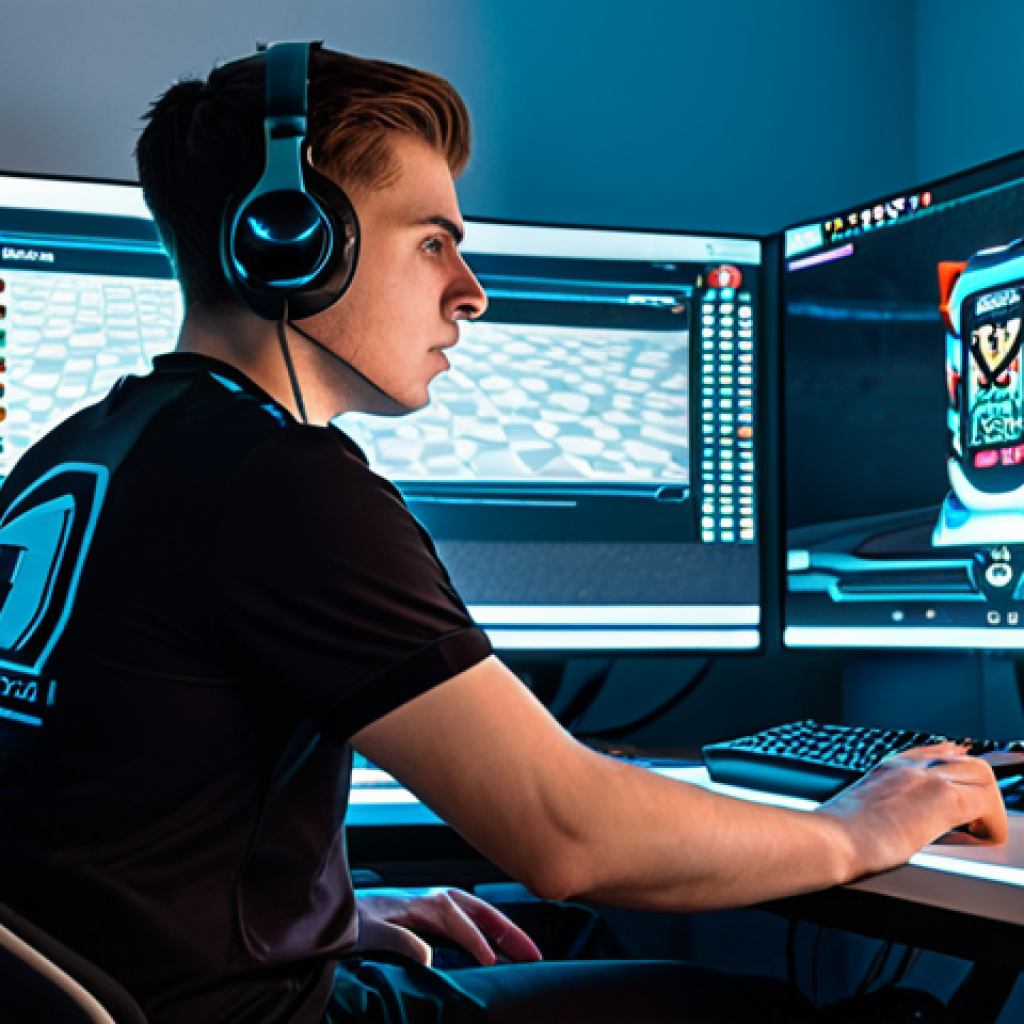
Ever hit that frustrating wall when trying to access your favorite online game, only to be blocked by geographical restrictions or plagued by unbearable lag?
I’ve been there, staring at a frozen screen while my friends zipped past me in TalesRunner. It felt utterly unfair, like being on the outside looking in.
In today’s hyper-connected, yet paradoxically fragmented online world, many gamers face similar issues, whether it’s country-locked content or simply trying to get a stable connection for those competitive races.
With online gaming becoming increasingly globalized, but often segmented by regions, the need for a solution that transcends borders is more critical than ever.
The struggle is real when you just want to enjoy the game you love, but internet infrastructure or regional blocks stand in your way. I personally found that a good VPN isn’t just about privacy anymore; it’s a game-changer for unlocking seamless access and reducing those annoying ping spikes.
It’s about leveling the playing field for everyone, no matter where you are. Let’s delve deeper into how you can make this happen.
Ever hit that frustrating wall when trying to access your favorite online game, only to be blocked by geographical restrictions or plagued by unbearable lag?
I’ve been there, staring at a frozen screen while my friends zipped past me in TalesRunner. It felt utterly unfair, like being on the outside looking in.
In today’s hyper-connected, yet paradoxically fragmented online world, many gamers face similar issues, whether it’s country-locked content or simply trying to get a stable connection for those competitive races.
With online gaming becoming increasingly globalized, but often segmented by regions, the need for a solution that transcends borders is more critical than ever.
The struggle is real when you just want to enjoy the game you love, but internet infrastructure or regional blocks stand in your way. I personally found that a good VPN isn’t just about privacy anymore; it’s a game-changer for unlocking seamless access and reducing those annoying ping spikes.
It’s about leveling the playing field for everyone, no matter where you are. Let’s delve deeper into how you can make this happen.
Unmasking the True Culprits of Online Gaming Woes

The pain of lag, sudden disconnections, or being locked out of a game you’ve poured hours into is something almost every online gamer has experienced.
It’s not just a minor annoyance; it can completely ruin your gaming session, especially when you’re in the middle of a crucial raid or a competitive match.
I remember countless nights where my TalesRunner races were more about predicting teleporting opponents than actual skill, all thanks to a shoddy connection.
It felt like I was playing a different game entirely, one filled with unpredictable delays and phantom hits. This isn’t just about your internet speed; there are deeper, more insidious factors at play that prevent you from enjoying your digital escape.
Often, the problems stem from server distance, ISP throttling, or even geographical content restrictions that game developers impose, sometimes without much warning.
It’s a complex web of technical hurdles that can make you feel utterly helpless.
The Silent Killer: ISP Throttling and Congestion
Have you ever noticed your internet slowing down exactly when you fire up your favorite game? You’re not alone. Internet Service Providers (ISPs) sometimes intentionally slow down your connection based on the type of traffic you’re using.
This is known as throttling, and it’s a major headache for gamers. They might do this to manage network congestion, or simply because they don’t want you consuming too much bandwidth with high-data activities like gaming or streaming.
From my own personal experience, I’ve seen my ping skyrocket during peak hours, transforming a smooth gaming experience into a choppy, frustrating mess.
It’s a subtle form of control that can severely impact your gaming performance, making it nearly impossible to land those critical shots or execute precise maneuvers.
It leaves you feeling like your connection is being held hostage.
Geographical Blockades: Why Your Game Isn’t Global
It’s a global world, right? So why can’t you access a game that’s popular in another country, or why are your friends in different regions playing on separate servers?
Geographical restrictions are a pervasive issue, often due to licensing agreements, regional pricing, or even content censorship. Game publishers implement these digital borders, effectively creating walled gardens where certain content or entire games are unavailable outside specific territories.
I recall the sheer frustration of trying to join an international guild for a game, only to realize that the version I had downloaded in my region was incompatible with theirs.
It felt like being a second-class citizen in the gaming world, arbitrarily excluded from content that others enjoyed freely. These blocks are a stark reminder that even in a digital age, physical borders still dictate much of our online experience.
The Game-Changing Power of a Virtual Private Network (VPN)
For years, I associated VPNs primarily with online privacy and security – protecting your data from prying eyes. While those benefits are absolutely crucial, my perspective completely shifted when I realized their transformative power for gaming.
A VPN fundamentally re-routes your internet traffic through a server in a different location, making it appear as though you’re browsing from that selected country.
This simple change opens up a world of possibilities for gamers, effectively dismantling the digital walls that once confined us. It’s not magic, but it feels pretty close when you finally access that region-locked server or witness your ping drop to buttery-smooth levels.
The ability to choose your virtual location means you can bypass those annoying geographical restrictions that prevent you from playing certain games or accessing specific content.
It’s about reclaiming control over your online gaming destiny and ensuring you get the experience you truly deserve.
Bypassing Geo-Restrictions with Ease
One of the most immediate and satisfying benefits of a VPN for gamers is its ability to effortlessly bypass geo-restrictions. Imagine wanting to play a game that’s only launched in Asia, or accessing a specific game server that’s exclusive to North America, despite living somewhere completely different.
A VPN makes this a reality. By simply connecting to a server in the desired region, your IP address is masked, and you appear to be in that country. I’ve personally used this to jump onto servers with friends in other time zones for late-night raids, something that was impossible before.
This isn’t just about unlocking new games; it’s about participating in a truly global gaming community without arbitrary barriers.
Stabilizing Your Connection and Reducing Lag
While a VPN can’t magically give you fiber-optic speeds if you’re on a dial-up connection (let’s be real!), it can significantly help in stabilizing your connection and reducing latency, especially if your ISP is throttling your gaming traffic.
By encrypting your data and routing it through a secure tunnel, a VPN can sometimes circumvent these deliberate slowdowns. Furthermore, if your game server is geographically closer to a VPN server than to your actual location, you might even experience a lower ping.
I’ve witnessed my ping drop by significant margins when connecting through a VPN server closer to the game’s data center, turning unplayable lag into perfectly manageable gameplay.
This makes a massive difference in fast-paced games where every millisecond counts, allowing for quicker reactions and a far more enjoyable experience.
Selecting the Ideal VPN for Your Gaming Arsenal
Choosing the right VPN can feel like navigating a maze, given the sheer number of providers out there. Not all VPNs are created equal, and what works wonders for streaming might not be the best fit for your intense gaming sessions.
When I was first looking, I got overwhelmed by all the technical jargon, but I quickly learned to focus on a few key factors that genuinely impact gaming performance.
You need a VPN that prioritizes speed, has a vast network of servers, and offers robust security features without compromising on performance. Don’t fall for the trap of “free” VPNs; they often come with data limits, slower speeds, and questionable privacy practices that will only frustrate you more in the long run.
Investing in a reputable, premium VPN is investing in your gaming peace of mind.
Key Features: Speed, Servers, and Security
For gamers, speed is paramount. Look for VPNs that boast high-speed connections and utilize modern, efficient protocols like WireGuard or OpenVPN. A large server network is equally important, as it gives you more options to connect to servers geographically closer to your desired game server, potentially reducing latency.
Security, while often overlooked by gamers focused solely on speed, is crucial for protecting your online identity and preventing DDoS attacks. A good VPN offers military-grade encryption and a strict no-logs policy, ensuring your gaming activities remain private.
Understanding VPN Protocols for Gaming
Different VPN protocols offer varying balances of speed and security.
- OpenVPN: A highly secure and versatile protocol, but can be slightly slower due to its heavy encryption. It’s great for general browsing and ensuring maximum security.
- WireGuard: Newer and much faster than OpenVPN, designed for high performance and strong security. This is often the preferred choice for gaming due to its efficiency.
- IKEv2/IPSec: Offers a good balance of speed and security, often excelling at maintaining connections on mobile devices or when switching between networks.
From my trials, WireGuard consistently delivered the best results for gaming, providing a noticeable boost in responsiveness compared to other protocols.
Setting Up Your VPN for Peak Gaming Performance
Once you’ve chosen your VPN provider, the setup process is typically straightforward, but there are a few tweaks you can make to ensure you’re getting the absolute best performance for your gaming.
It’s not just about hitting the “connect” button; optimizing your settings can significantly impact your ping and stability. I’ve spent hours experimenting with different server locations and protocol settings, and these small adjustments really do make a difference.
Don’t just settle for the default; take a few extra minutes to fine-tune your connection. This proactive approach will save you countless headaches during those critical gaming moments.
Remember, a well-configured VPN is your best ally against the unpredictable nature of online gaming connections.
Choosing the Right Server Location
This is perhaps the most critical step for gaming. You want to connect to a VPN server that is geographically closest to the game server you’re trying to play on, not necessarily closest to your physical location.
For instance, if you’re in Europe but playing on a US East Coast game server, connecting to a VPN server in New York will likely give you better ping than connecting to one in London, even if London is closer to you.
Experiment with a few different servers in the target region until you find one that gives you the lowest ping. Many VPN apps provide ping indicators next to their server locations, which is a fantastic feature for gamers.
Optimizing VPN Settings and Protocols
Within your VPN application, explore the settings menu.
| Setting/Feature | Impact on Gaming | Recommendation |
|---|---|---|
| VPN Protocol | Determines speed and security. | Prioritize WireGuard or IKEv2 for speed. OpenVPN UDP is a good fallback. Avoid OpenVPN TCP if possible. |
| Kill Switch | Prevents IP leaks if VPN disconnects. | Always enable. Essential for competitive gaming to avoid revealing your real IP. |
| Split Tunneling | Allows specific apps to bypass the VPN. | Useful if only your game needs the VPN, keeping other traffic local for speed. |
| DNS Settings | Affects how fast domain names are resolved. | Use the VPN’s default DNS or switch to a fast public DNS (e.g., Cloudflare 1.1.1.1). |
Experiment with different VPN protocols within your app. As mentioned, WireGuard often offers the best balance for gaming. Also, ensure features like a “Kill Switch” are enabled.
This feature is a lifesaver; it automatically cuts off your internet connection if the VPN disconnects, preventing your real IP address from being exposed, which is crucial for competitive players.
Troubleshooting Common VPN Gaming Hiccups
Even with the best VPN, you might occasionally run into issues. It’s frustrating when you’re all geared up for a session and something just isn’t working.
I’ve had my share of moments where I thought my VPN was faulty, only to realize it was a simple fix. Don’t panic! Most common problems are easily resolved with a few quick checks.
It’s all part of the learning curve when you’re leveraging advanced tools to enhance your gaming experience. The key is knowing what to look for and how to systematically address the problem, rather than just throwing your hands up in exasperation.
A little patience and methodical troubleshooting will usually get you back in the game faster than you think.
When Your VPN Isn’t Connecting or Slow
If your VPN isn’t connecting, try switching to a different server location or changing the VPN protocol. Sometimes, specific servers might be experiencing temporary issues or are simply overcrowded.
If your connection feels sluggish, ensure you’re using a gaming-optimized protocol like WireGuard. Also, check your local internet speed without the VPN to rule out issues with your ISP.
A quick reboot of your router and computer can often clear up minor network glitches. Disconnecting and reconnecting to the VPN server can also refresh the connection and improve performance.
Dealing with Game-Specific Blocks and Errors
Some game developers have implemented measures to detect and block VPN usage. If you encounter a specific error message or notice that only your game isn’t working while other applications are fine through the VPN, try the following:
- Clear your DNS Cache: This can help refresh your network’s understanding of IP addresses.
- Switch VPN Servers: Often, just switching to a different server in the same country can bypass a block.
- Try a Different Protocol: Some protocols might be more easily detected than others.
- Contact VPN Support: Your VPN provider’s support team is a valuable resource; they often have specific workarounds for popular games.
I remember a particular game update that momentarily blocked my VPN access; a quick server change was all it took to get me back into the action.
The Future of Gaming Connectivity: What’s Next?
As online gaming continues its relentless march forward, the demand for seamless, borderless, and low-latency experiences will only intensify. What was once a niche tool for privacy has evolved into an indispensable utility for gamers worldwide.
We’re moving towards a future where geographical limitations become relics of the past, and every player, regardless of their physical location, can enjoy the same high-quality, competitive, and social gaming environment.
This isn’t just wishful thinking; it’s a necessary evolution driven by the sheer global scale of modern gaming communities. The ongoing development of faster internet infrastructure and more sophisticated VPN technology promises an even more connected and equitable gaming landscape for everyone.
Cloud Gaming and VPNs: A Perfect Match?
The rise of cloud gaming platforms like GeForce Now and Xbox Cloud Gaming introduces another layer where VPNs can play a crucial role. These services stream games directly to your device, often relying on server proximity for optimal performance.
A VPN can help you connect to a cloud gaming server in a different region, potentially unlocking games unavailable in your country or even improving streaming quality by finding a less congested route.
I’ve personally used my VPN to access different cloud gaming libraries, feeling like I had a secret key to an entire universe of games. It’s an exciting synergy that pushes the boundaries of accessibility.
The Ever-Evolving Arms Race Against Geo-Restrictions
It’s an ongoing cat-and-mouse game. As VPN technology advances, so do the methods game publishers use to detect and block VPNs. However, reputable VPN providers are constantly innovating, developing new features and protocols to stay ahead.
This continuous evolution means that while you might occasionally encounter a roadblock, the tools to overcome it are always improving. It’s a testament to the dedication of both sides, but ultimately, the goal for gamers is unrestricted access and a consistently high-quality experience, and VPNs are at the forefront of delivering that promise.
Closing Thoughts
The journey to unlocking your full gaming potential, free from the shackles of lag and geo-restrictions, truly begins with embracing a powerful VPN. It’s more than just a tool for privacy; it’s your personal portal to a global gaming arena, leveling the playing field and ensuring every pixel of your experience is pure enjoyment.
I’ve seen firsthand how it transforms frustration into seamless fun, allowing me to connect with friends and compete without limitations. So, go forth, arm yourself with the right VPN, and reclaim the joy of truly borderless, lag-free gaming – because every gamer deserves that ultimate freedom.
Useful Information
1. Always prioritize premium VPNs for gaming. Free services often compromise speed and security, which are vital for a smooth gaming experience.
2. Experiment with different server locations, focusing on servers closest to the game’s data center rather than your physical location for optimal ping.
3. Utilize VPN features like Split Tunneling to route only your game traffic through the VPN, potentially improving overall internet speed for other applications.
4. Stay updated on your VPN provider’s recommended protocols. WireGuard is often the best choice for gaming due to its balance of speed and security.
5. If you encounter issues, clear your DNS cache or switch to a different VPN server; these simple steps can often resolve connectivity problems.
Key Takeaways
A VPN is an essential tool for modern gamers, enabling you to bypass geographical content restrictions and significantly reduce lag caused by ISP throttling or server distance.
When selecting a VPN, prioritize speed, a large global server network, and robust security features, opting for premium services over free alternatives.
Optimizing your VPN settings, especially choosing the correct server location and gaming-friendly protocols like WireGuard, is crucial for peak performance.
While troubleshooting, remember simple steps like switching servers or clearing your DNS cache can often resolve common issues, ensuring an uninterrupted and truly global gaming experience.
Frequently Asked Questions (FAQ) 📖
Q: You mentioned VPNs being a “game-changer” for accessing content and reducing ping spikes. Could you break down how they actually achieve that for online gaming?
A: Absolutely! From my own frustrating experiences, it often felt like I was battling not just in-game enemies but also the internet itself. The way I see it, a good VPN tackles two big problems head-on.
First, for geo-restrictions, it’s like having a digital teleportation device. When you connect to a VPN server in a different country, your internet traffic looks like it’s coming from there.
So, if a game’s content is locked to, say, the US, and I’m stuck elsewhere, I just pick a US server, and boom – I’m in. I’ve personally used this to jump into regions for events I’d otherwise miss, or just to play a localized version of a game with friends abroad.
Second, for lag and those dreaded ping spikes, it’s a bit more nuanced but equally impactful. Sometimes, your default internet route to a game server is like taking a super congested, roundabout highway.
A VPN can actually reroute your connection through a more direct, less crowded path. I’ve seen my ping drop from an unplayable 150ms to a crisp 40ms just by switching to a VPN server that had a better, more optimized path to the game’s actual server.
It’s not magic; it’s about smart routing and often bypassing your ISP’s potentially sluggish pathways. It truly levels the playing field when you’re not fighting an uphill battle against your own connection.
Q: That sounds incredibly helpful, but surely there must be some downsides or pitfalls when using a VPN for online gaming, right? What should someone be wary of?
A: You’re spot on to be cautious; it’s definitely not a one-size-fits-all solution, and there are absolutely things to watch out for. My biggest warning?
Don’t just grab the first free VPN you see. I learned that the hard way. Many free services are either notoriously slow, riddled with ads, or worse, they might even sell your data, which completely defeats the privacy point.
I once tried a “free” option and my ping actually doubled – it was like trying to game underwater. Another potential pitfall is that a VPN adds an extra step to your connection.
While a good VPN optimizes this, a poor one, or connecting to a server that’s thousands of miles away when a closer, better option exists, can introduce more latency.
It’s about finding that sweet spot. Also, some game publishers are a bit wary of VPN use, especially if they associate it with cheating or region abuse, though this is rare for general access.
Lastly, premium VPNs cost money. While I see it as an investment in my gaming experience, it’s an added monthly or yearly expense that needs to be factored in.
It’s not a magic bullet for terrible base internet either, but for routing issues and geo-blocks, it’s often the missing piece.
Q: Given how many VPN services are out there, and how crucial the right one seems to be for gaming, what specific criteria or features should I prioritize when trying to pick the best VPN for my gaming needs?
A: Choosing a VPN specifically for gaming is a bit different than just for general browsing, and I’ve definitely gone down the rabbit hole of trying to find the perfect one.
From my experience, the absolute top priority is speed and low latency. This means looking for providers with a large network of high-speed servers, especially ones located physically close to the game servers you want to connect to.
I always check if they support modern, fast protocols like WireGuard or optimized OpenVPN UDP configurations. If a VPN slows down your connection significantly, it defeats the purpose for gaming.
Second, server count and global distribution are key. The more server locations they have, the better your chances of finding a fast, uncrowded server near your game’s region.
I’ve found that having options prevents those annoying server overloads. Third, a strict no-logs policy is crucial for trust and privacy – you don’t want your gaming habits or data being tracked.
And finally, look for services that offer free trials or a solid money-back guarantee. This is non-negotiable for me. You have to test the VPN with your specific games, on your specific internet connection, and against the servers you frequent.
What works perfectly for one person might be sluggish for another, so testing it yourself before committing is the real secret sauce. There’s nothing worse than signing up for a year only to find it’s terrible for your favorite title.
📚 References
Wikipedia Encyclopedia
구글 검색 결과
구글 검색 결과
구글 검색 결과
구글 검색 결과
구글 검색 결과